Product, Technology & Business Strategy Leader

I turn enterprise strategy into governed, adopted digital products.

15+ years turning big ideas into things people actually use, across agencies, global manufacturing and insurance. At Unum I advise IT leadership on a $20–24M technology portfolio, set up AI governance as the first use case on the Monitaur platform, and deliver platforms for 65,000+ active digital users and 1,000+ contact center agents. Customers don’t wake up wishing for a better website; they’re trying to get something done. I take the friction out of that, and I like rolling up my sleeves with engineers to build it, including with Claude Code.

Outside work I advise and teach at a youth robotics organization, and live in Southern Pines, North Carolina, usually camping, hiking or fishing with a good coffee in hand and barbecue never far behind.

Open to Director and AVP roles in product, technology and business strategy

Portrait of Michael Daily, smiling, in a navy blazer and light blue shirt
  • $20–24Mtechnology portfolio advised
  • 1,000+contact center agents supported
  • 16 moowner of a live agentic IVR
  • 1M+Digital Tasks transactions, 2026 YTD

How I think

The same handful of habits show up in every product below. They are what I would bring to a new team.

Decide once, render everywhere

When five channels each interpret the same data, they drift. I look for the one place a decision belongs, put it there, and let every channel show the finished answer.

Rules are data the business can read

Wording and visibility rules change for business and legal reasons, not engineering ones. I keep them out of code, versioned, reviewable and signed off by the people who own them.

Estimate value before work begins

A business case, success metrics and an operating model come first, built with CX, finance and operations. It is how a good idea becomes a funded roadmap.

Prove it on a thin slice

I build working proofs of concept early so stakeholders react to something real. Scenarios are agreed with analysts and product owners before the build, not after.

Controls are part of the product

Audit logging, human review of AI output, stage gates and risk tiering are designed in from the start. In regulated work, trust is a feature.

Know when to stop

I paused an AI letter-generation project whose mandate was to recreate the existing process. It would not have made letters faster or better. Agreeing the foundations first was the right call.

How I run a piece of work

  1. DiscoverCurrent state, who is affected, what it costs today.
  2. FrameBusiness case, success metrics, the decision being asked for.
  3. DesignShared model first, then per-channel presentation.
  4. BuildHands-on with engineering, tested, audit-logged, deployed by pipeline.
  5. IterateCollect feedback, data and insights on what to improve, implement it, and go around again.

Selected work

Seven products from the Claims and Leave Management platform at Unum, then earlier work at Shaw Contract. Each is framed the way I would pitch it: the problem, what I owned, how it works, and what changed.

Product leadership · Digital self-service

Digital Tasks

Replacing email, phone and fax collection with one digital-first ecosystem.
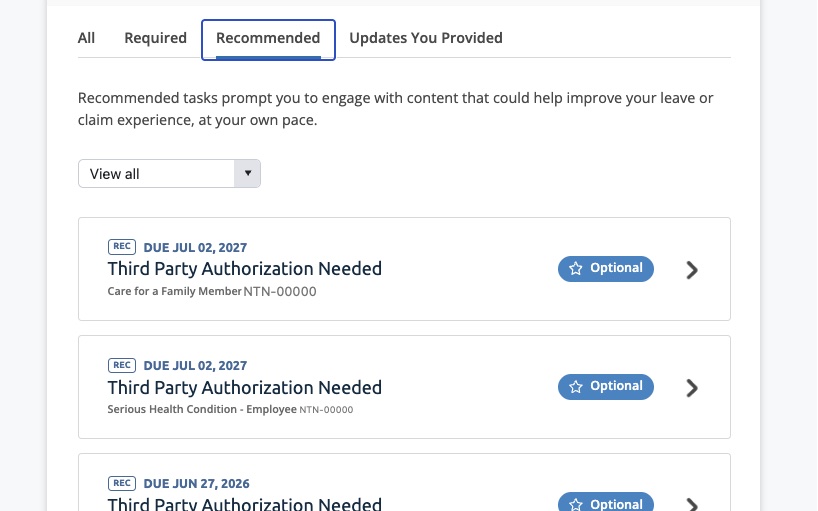
Employee portal Tasks page with All, Required, Recommended and Updates You Provided tabs and a list of recommended tasks with due dates and an Optional tag
The employee’s Tasks page: what is needed, across every case
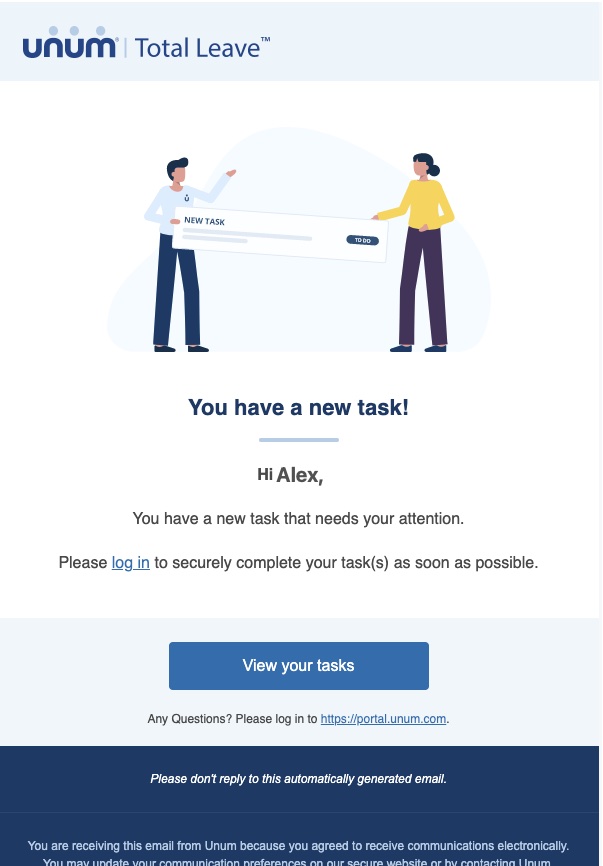
Email with a Unum Total Leave header and an illustration of two people holding a card labelled New Task, reading You have a new task, with a View your tasks button
The email that says a task is waiting

Screens show example data.

The problem

Information needed to decide a claim was collected by email from employers and by phone and fax from claimants. It was slow, manual, hard to track, and created outbound calls to chase it.

My role

I led discovery, current-state assessment, the business case and the solution design, then delivered in increments across personas, topics and product lines.

Approach

  • A task always carries the case it is for, so what is collected lands in the right place.
  • Claimants can also start their own task, for example to report something never requested.
  • Each task sends its own status communications, kept separate from intake confirmation.
  • Delivered persona by persona rather than as a single big release.
Digital Tasks, before and afterBEFOREEmployers: emailClaimants: phone and faxManual chase andre-keyingInformation reachesthe caseAFTEREmployersClaimantsDigital Taskalways carries the case IDInformation landson the case
Email, phone and fax collection replaced by one digital task tied to the case it is for.

Product & technology · Digital intake

Employee Portal: claim intake

Claim filing that moved from an 18-minute phone call to a form customers complete any time.
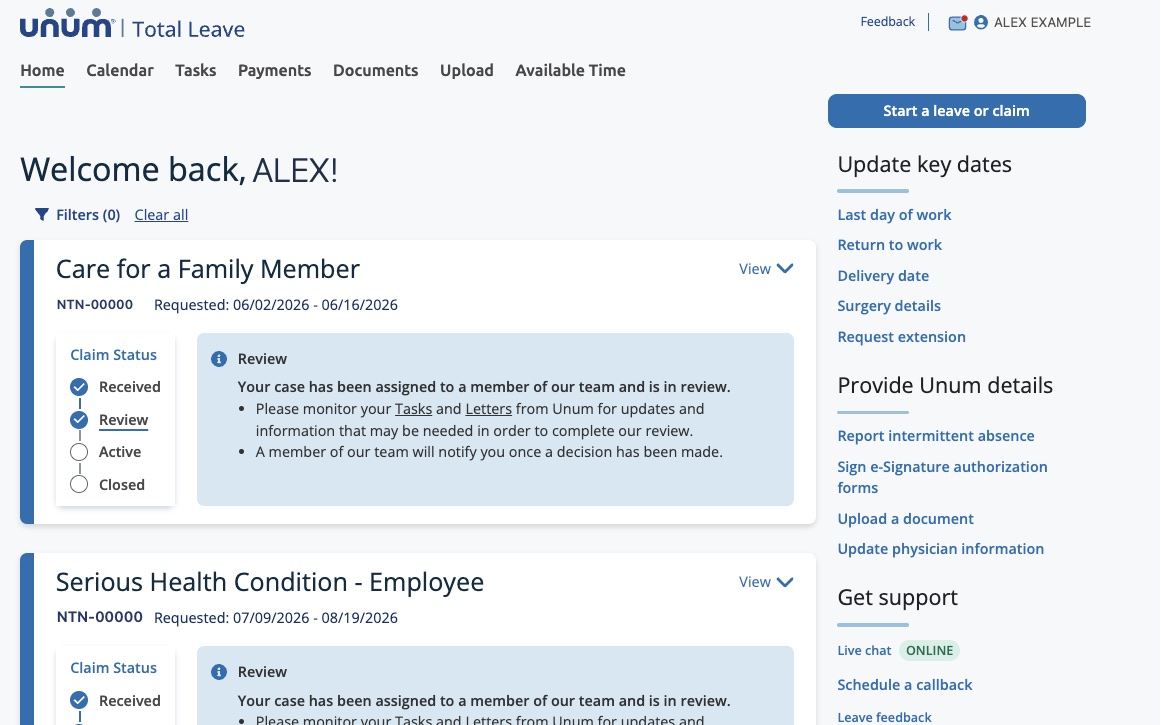
Employee portal home page with a welcome message, two claim cards each showing a claim status stepper in review, and a side panel of actions to update key dates and provide details
The employee portal home page: every case at a glance, with the actions that matter

Screens show example data.

The problem

Starting a claim meant an 18-minute phone call. Intake was also customized per employer, which does not scale. Accurate, complete data at intake is what lets a claim be processed at all.

Before

An 18-minute phone call to start a claim.

18-minute callPer-employer custom intake

After

Customers file their own claim online, with leave planning and their employer’s content built in.

24/7 filingLeave planningEmployer dynamic content

My role

Hands-on in the design and build of the Employee Portal, including the claim intake form.

Approach

  • Moved the intake form online. Customers can file a claim 24/7, and plan their leave as part of the same flow.
  • Employer dynamic content. Each employer’s messaging appears inside the form, so no employer needs a custom build.
  • Replaced per-employer custom intake with structured customization categories and headless-CMS messaging.

Product & technology · Employer self-service

Employer Portal

The people who manage employees on leave get what they need in one place, without an email.
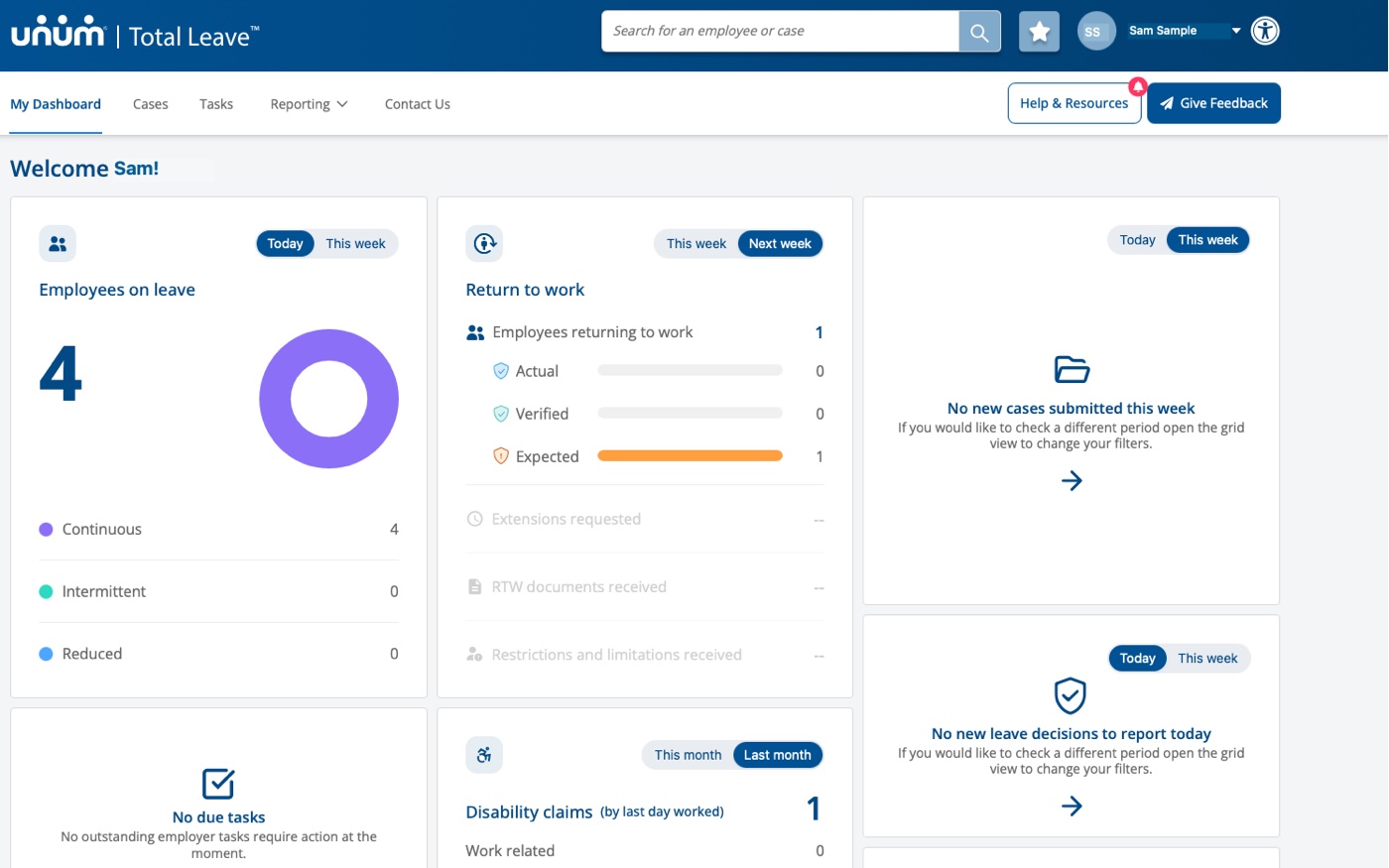
Employer portal dashboard with tiles for employees on leave, return to work, disability claims, tasks due and leaves pending
The dashboard: who is out, who is returning, what is due
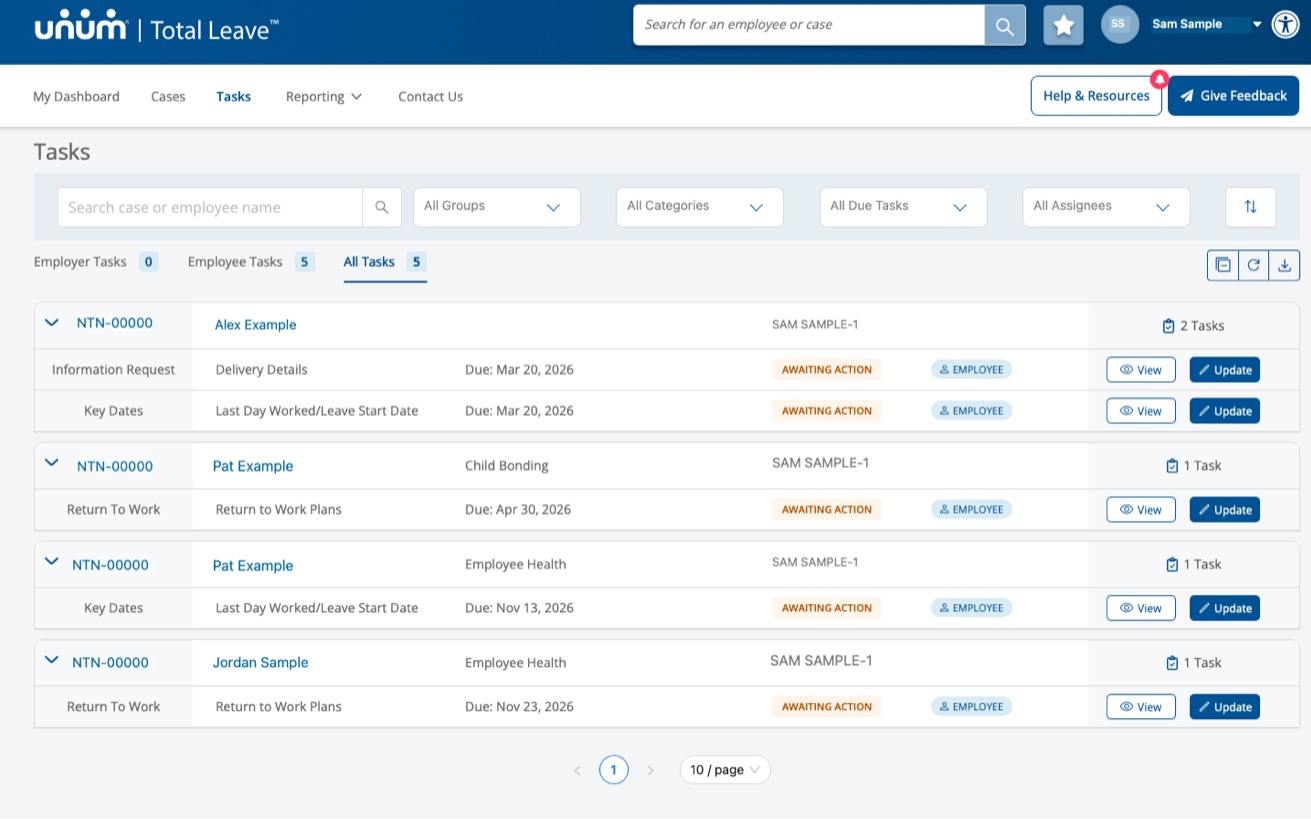
Employer portal Tasks page listing cases with their tasks, due dates and an awaiting action status, with filters across the top
Tasks across every employee, in one list

Screens show example data.

The problem

HR teams and managers need to know who on their team is out, when they are expected back, and what Unum needs from them to support their people. That used to arrive by email, hundreds of thousands of them.

Before

Emails to chase and answer, one case at a time.

Hundreds of thousands of emailsNo single view of who is out

After

One portal showing who is out, when they return, and what Unum needs, handled as digital tasks.

Who’s outExpected returnTasks for me

My role

Hands-on in the design and build of many aspects of the Employer and Manager portals, as part of the same digital self-service program as the Employee Portal.

Approach

  • Design for the three people who use it. HR administrators, HR business partners and managers each get access to the key information about their employee population.
  • Answer the three questions first. Who is out and when, when are they expected back, and what does Unum need from me to support my people.
  • Replace email with Digital Tasks. What Unum needs from an employer is a task with its case attached, so it is tracked and answered in the portal instead of in an email thread.
  • One ecosystem. Digital Tasks and headless-CMS messaging span the employee and employer sides, so the two portals tell one story.

Technology leadership · Platform & AI-assisted build

Enterprise Claim Status API & SDK

One consistent answer to “what is happening with my claim?” across portals, agents, letters, email and IVR.
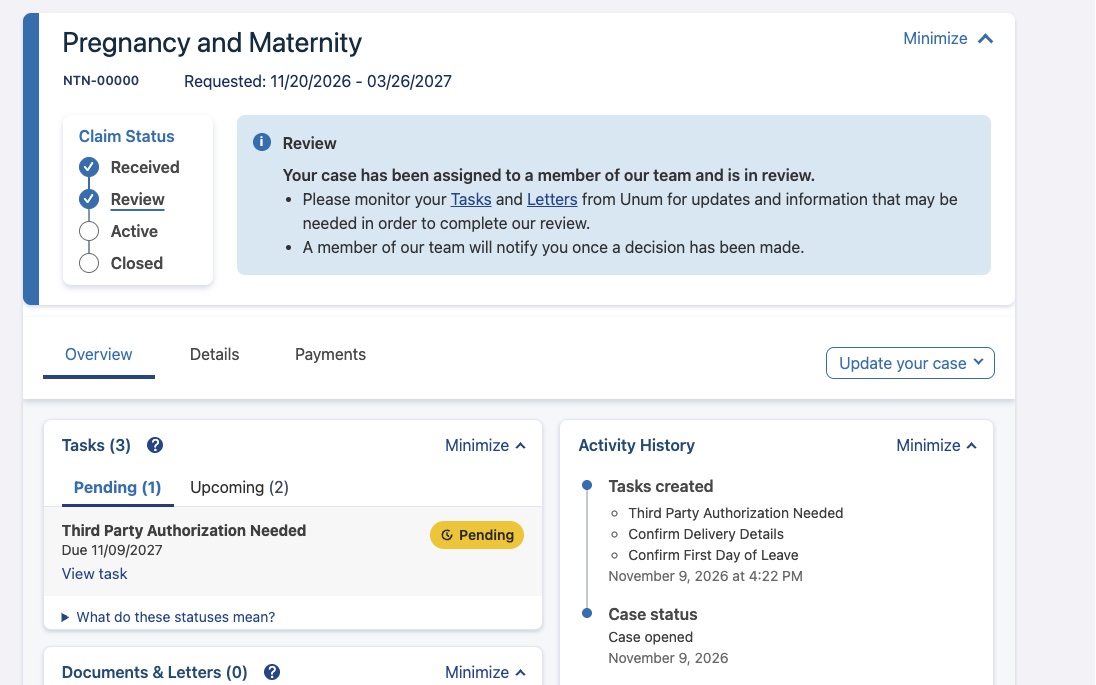
The claim card inside the employee portal for a pregnancy and maternity leave: claim status at Review, a pending task, and activity history
The claim card in the employee portal: status, tasks and activity in one place
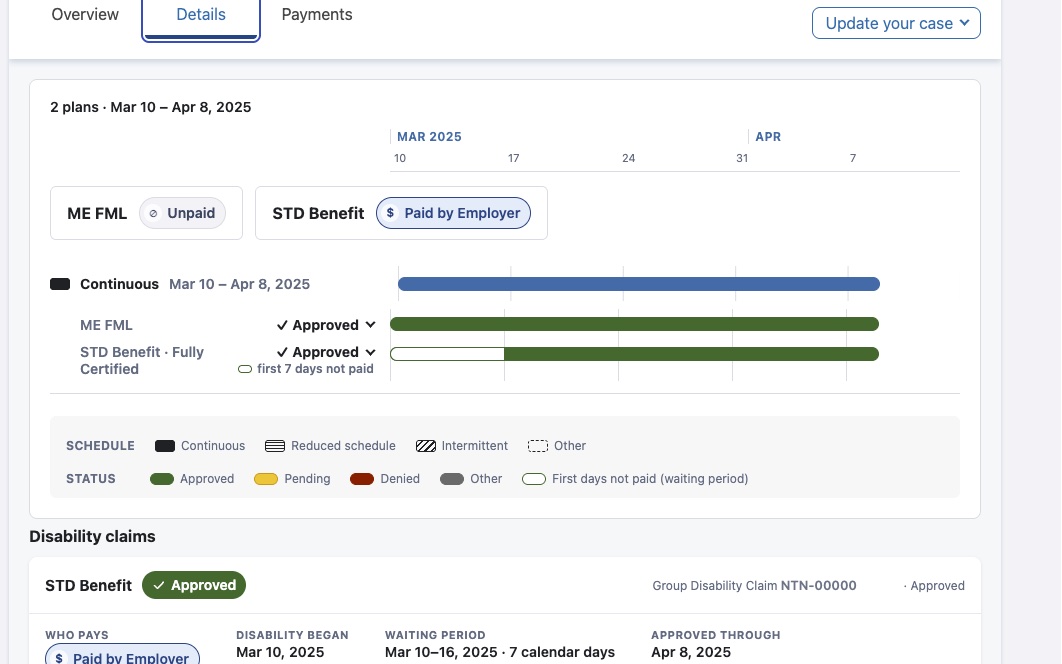
Details tab of the claim card: a timeline of two plans over March and April with approved bars, a waiting period shown as a hollow stretch, and a disability claim summary
Details: the leave timeline, who pays and the waiting period
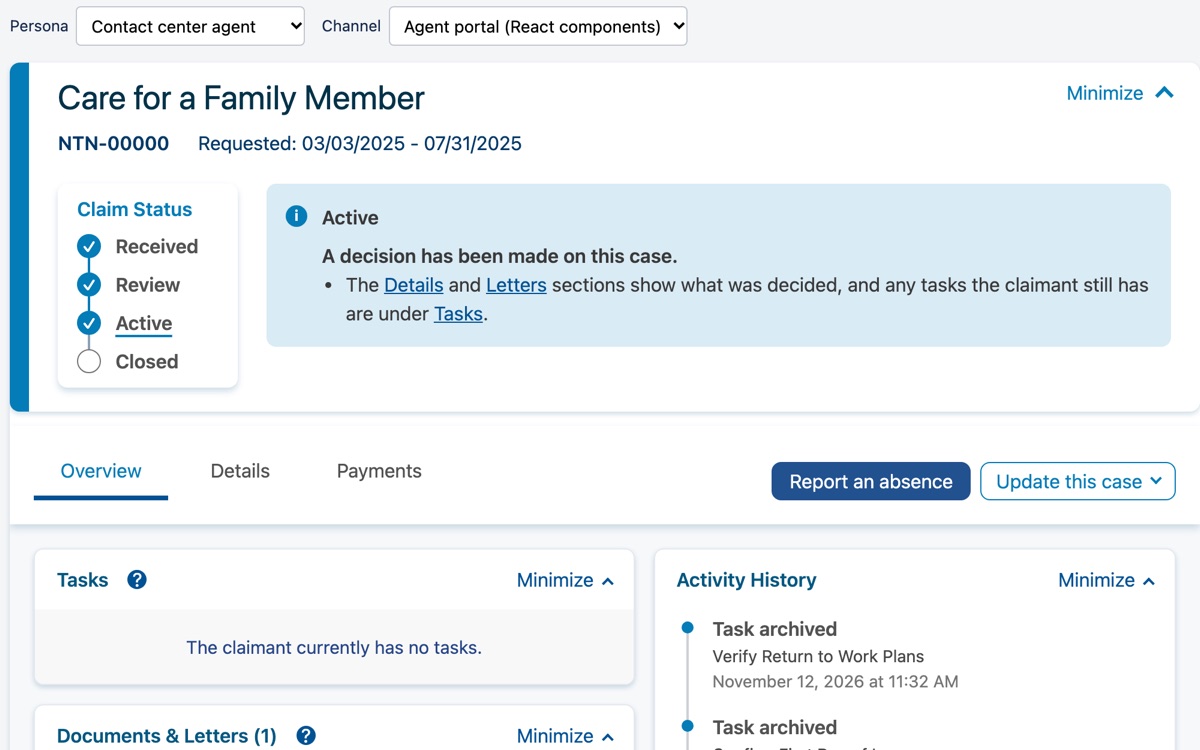
The same case card in the contact center agent view, worded for the agent: a decision has been made on this case
Contact center: the same case in the agent’s words
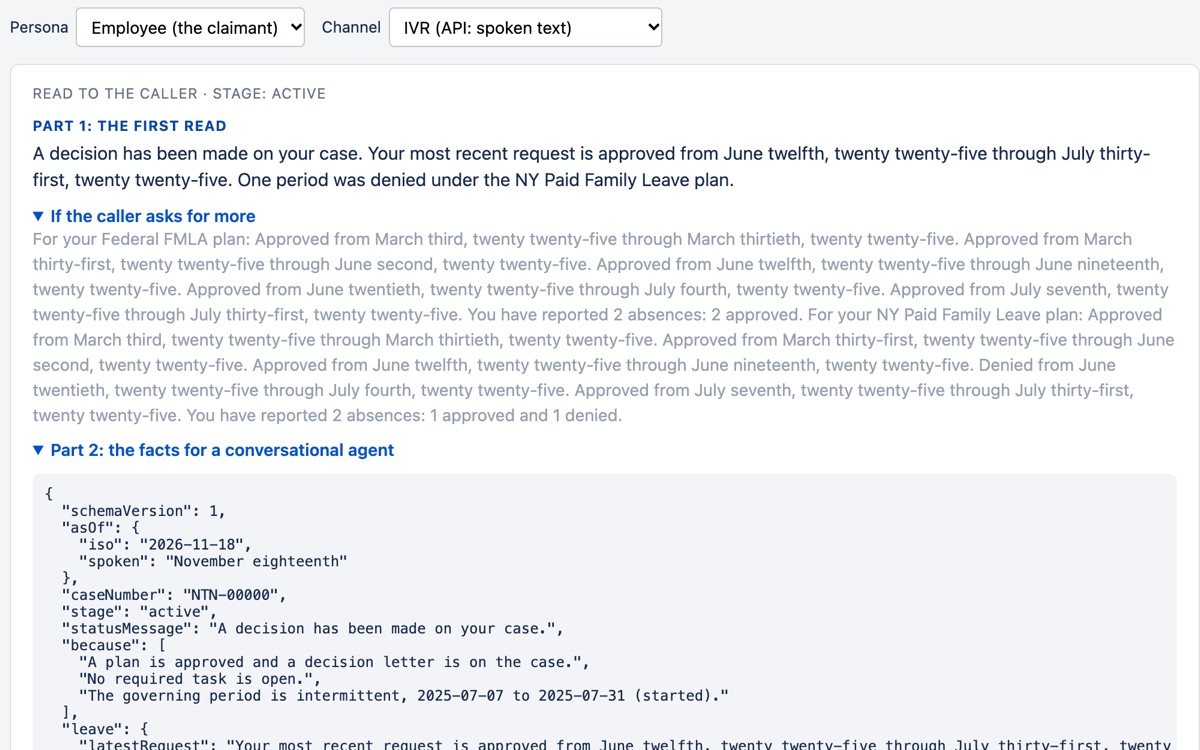
IVR channel output: a short spoken first read, longer detail for if the caller asks, and structured facts for a conversational agent
IVR: a spoken first read, plus facts for a conversational agent

Screens show example data.

The problem

Every channel carried its own front-end logic to interpret raw case data. The same business rule, such as what “Approved” means on a reduced-schedule leave, was duplicated and drifted, so a claimant could hear different answers from different places.

My role

I designed and built it with Claude Code, in partnership with Platform Engineering. I aligned business analysts and product owners on 29 claim-status scenarios before build.

Approach

  • Translate, don’t decide. The source systems make every eligibility and approval decision; this layer only translates and presents.
  • A pure transform. No I/O inside it, so it can move into any service unchanged and be tested exhaustively.
  • Shaped for the audience. Each response is built for a persona (employee, employer, agent) and a channel (portal, IVR, letter, email).
  • Sections fail alone. A case view is assembled section by section, so one slow source does not break the page.
  • Read-only. Nothing in it changes a case.
13 upstream services›Tested transform›Rules layer›API›React SDK

Product & governance · Business-owned change

Rule Manager

Let the business change claimant-facing wording and visibility, with an audit trail and the right sign-offs.
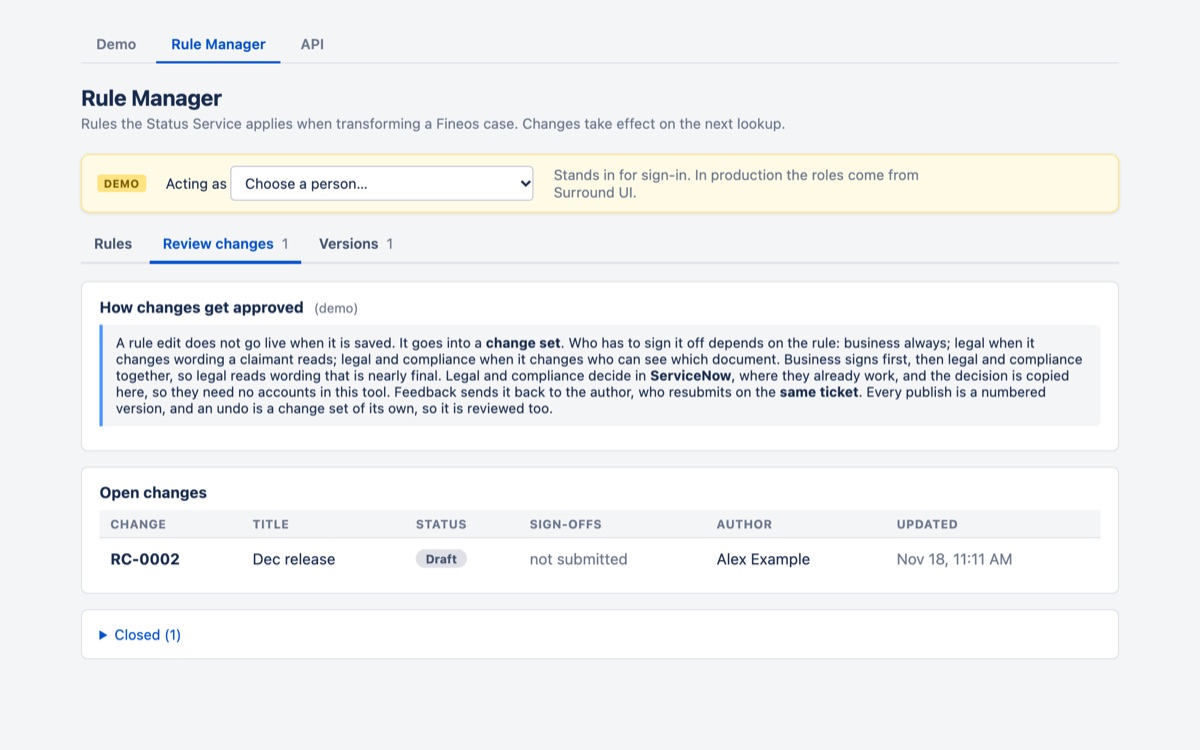
Rule Manager Review changes tab explaining that edits go into a change set with business and legal sign-off, and listing an open change in draft
Edits go into a change set, with sign-off before anything goes live
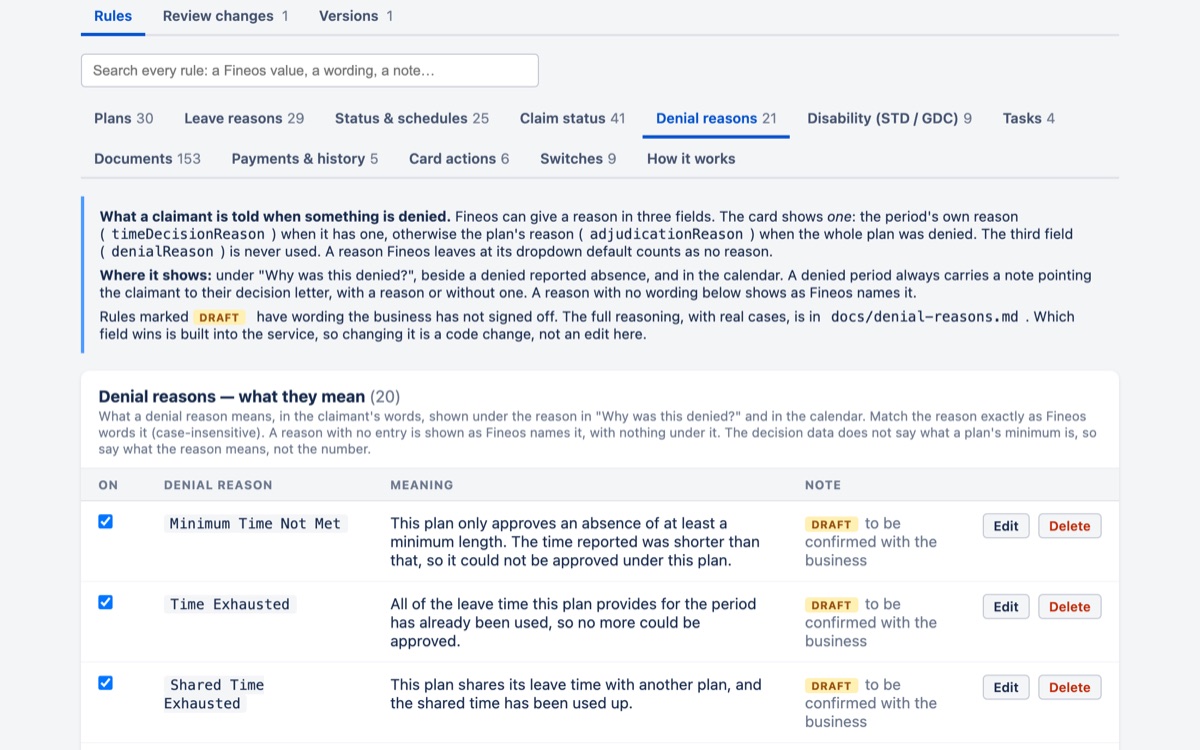
Rule Manager Denial reasons tab: a table of reasons with the plain-language meaning shown to the claimant and a Draft badge on wording awaiting business sign-off
Claimant-facing wording the business can read and edit

Screens show example data.

The problem

The rules decide claimant-facing wording and which documents each audience sees. They change for business and legal reasons, and a change needs an auditable trail. Burying them in code puts every change in an engineering queue.

My role

I defined the product: who edits, who approves, and how a change is promoted. I also built the working editor with Claude Code.

Approach

  • Rules as data. Stable keys, a content hash for every revision, and CSV sign-off for the first release.
  • Approvals attach to content. Sign-off is tied to the exact change, not to an environment.
  • Gates where risk is. Lower environments allow direct edits; sign-offs and promotion-only changes start at production.
  • Roles from the platform. Identity and roles come from the existing portal framework rather than a new user system.
  • Honest previews. A change preview is a spot check on a real case, not a promise of coverage.

Where it is going (design and demo)

Multi-level approvals for business and legal/compliance, with a link to the ticket in the legal team’s workflow tool. Assignees are tracked by department or role. The integration is designed as a swappable adapter, so a real one can replace the demo.

Product leadership · Conversational & agentic AI

Parloa and the agentic IVR

Giving the phone channel its first self-service, live in six weeks, and building a platform we owned rather than a vendor demo.

The problem

The phone experience had no self-service options at all. Two things were true:

  • Claimants want to engage on their channel of choice. Some prefer to call with an update instead of going online.
  • We needed to scale self-service, and some calls are harder than others.

Where we started

With Digital Tasks, because they are contained flows. We already know why we are asking: we need the information, so we identify the intent rather than relying on what the caller says they want. We know what success looks like and how to guide the caller to it. That let us go fast to prove the technology, then scale from there.

My role

I owned the vendor evaluation and led all aspects of the Parloa implementation, doing much of the work directly and managing the team members who did the rest. I defined the business case, operating model, success metrics and adoption roadmap with engineering, data and operations. I then led the production agent hands-on for 16 months before transitioning it to a scrum team.

Why Parloa

We chose it for speed and scale, and delivered the pilot in six weeks from signing the contract to production calls. It gave us:

  • Natural conversation and guided help for the caller.
  • Smooth integration between our Amazon Connect instance and our internal APIs.
  • Full transparency into the experience and the data.
  • All of it through configuration and a solution we built ourselves, so the knowledge was ours: how to run it, how to scale it, and why it worked. It was a platform we owned, not just a vendor proof of concept.

How it was run

  • A tightly managed task path, with checks at submission rather than open-ended conversation.
  • Humans audit the AI. Call transcripts and audio are reviewed by people.
  • Calls still ran through Amazon Connect for routing to agents, call recording and authentication, and I helped manage that instance.
  • Evolved deliberately from intent- and rule-driven to LLM-based.
Agentic IVR call flowCallerAmazon ConnectroutingrecordingauthenticationConversational agentmanaged task pathParloa, then AWSInternal APIschecks at submissionLive agentrouted through ConnectHuman audittranscripts and audio
Calls always run through Amazon Connect. The agent follows a managed task path and people audit the calls.

Moving to AWS

The enterprise set a standard that conversational AI and contact center tools should be built on AWS. To align with it, the agentic IVR moved to Amazon Connect, Lex and Bedrock. I compared approaches and trade-offs, defined like-for-like requirements and tested the AWS solution, then supported the move and the engineers building it. Because we owned the knowledge of how the agent worked, we were moving something we understood.

Product & technology · Contact center

Contact center tools & guided intake

Putting the right information on the agent’s screen, and guiding the most important call so it is done right the first time.

The problem

Contact center agents work in a complex, high-stress environment. Taking a new claim is the highest-stakes call: the data has to be accurate and complete for the claim to be processed at all, and it has to be captured quickly. New agents join through a “street to seat” hiring model, so the tools have to guide as well as record.

My role

I supported the development of Unum’s Amazon Connect instance, the contact center platform that the IVR sits in front of. That included a custom agent portal and custom call dispositioning. I designed and guided the requirements for several agent tools, including the guided intake solution.

Approach

  • Bring the caller’s key information to the agent’s screen. A custom agent portal shows what the agent needs, based on who is calling, so they are not hunting across systems while the caller waits.
  • Custom call dispositioning. Each call’s outcome is recorded the way the business needs it, not just the way the platform defaults.
  • Guided new-claim intake platform. Detailed scripting and question paths guide the agent through the call, so intake calls are completed quickly and completely.
  • Design for the agent who is new. The scripts and question paths carry the knowledge, which supported the “street to seat” hiring model.
  • Own the requirements. I designed and guided requirements across several agent tools, working with the teams that built them.

Earlier work: Shaw Contract

A $1B global commercial flooring business with no digital product organization. I built one, and the platform that came with it.

Product & technology leadership · 0→1 platform

Global site relaunch

Shaw Contract’s first digital product and customer experience, live in 10 months from funding.
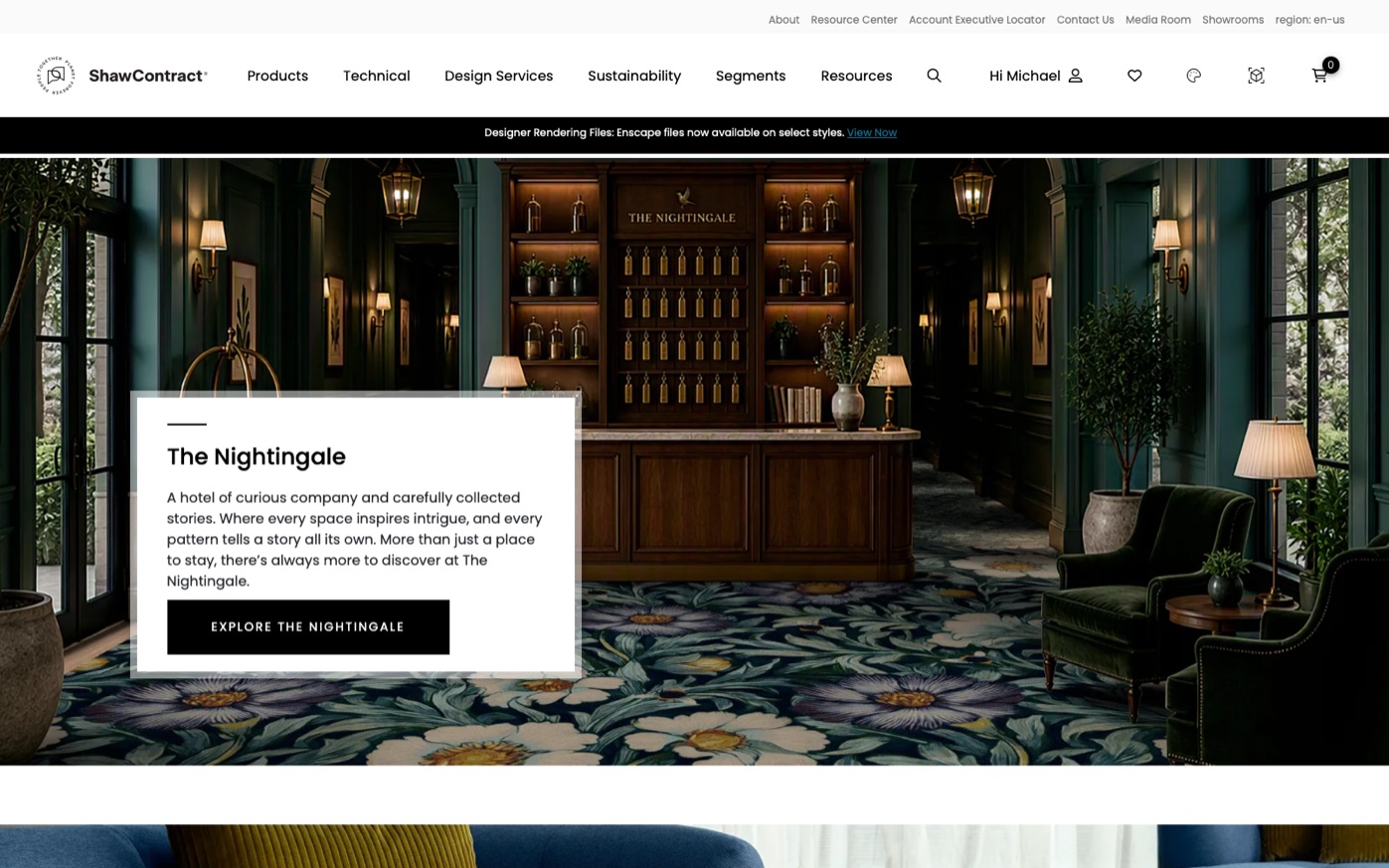
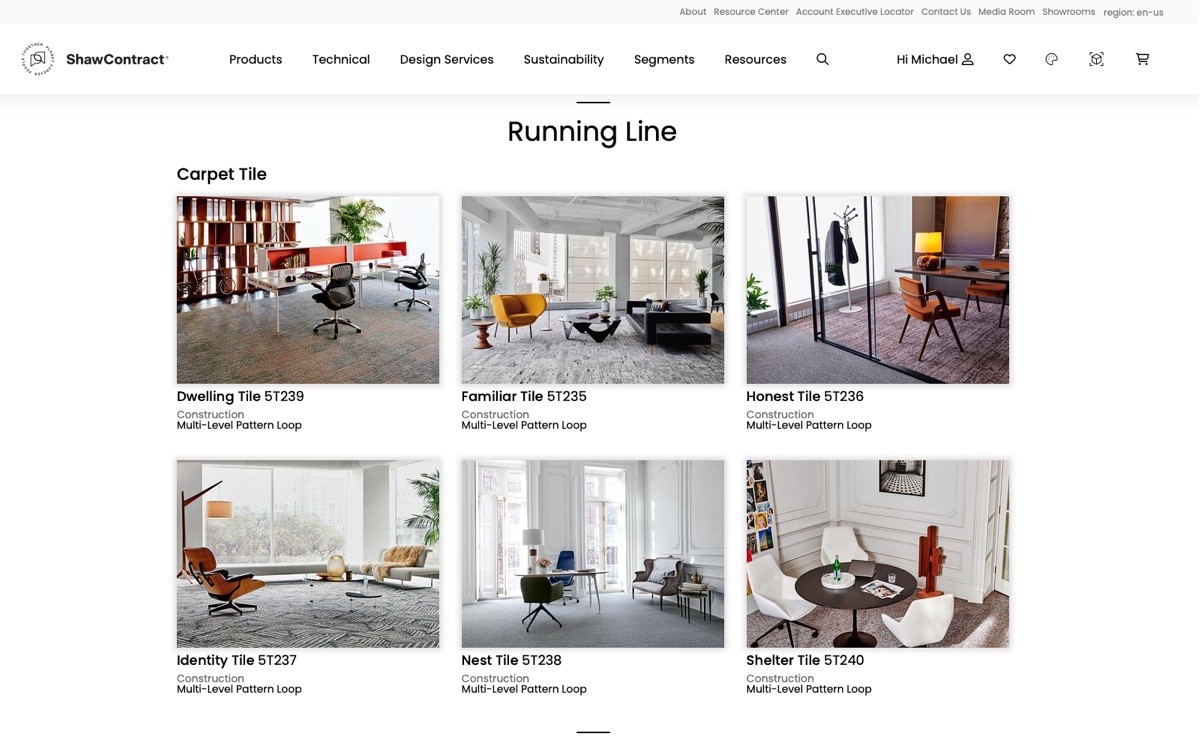
Shaw Contract home page with a full-width hotel hero image, main navigation and a banner above it
The home page
Product collection page listing carpet tile styles in a grid with photos
Product collections
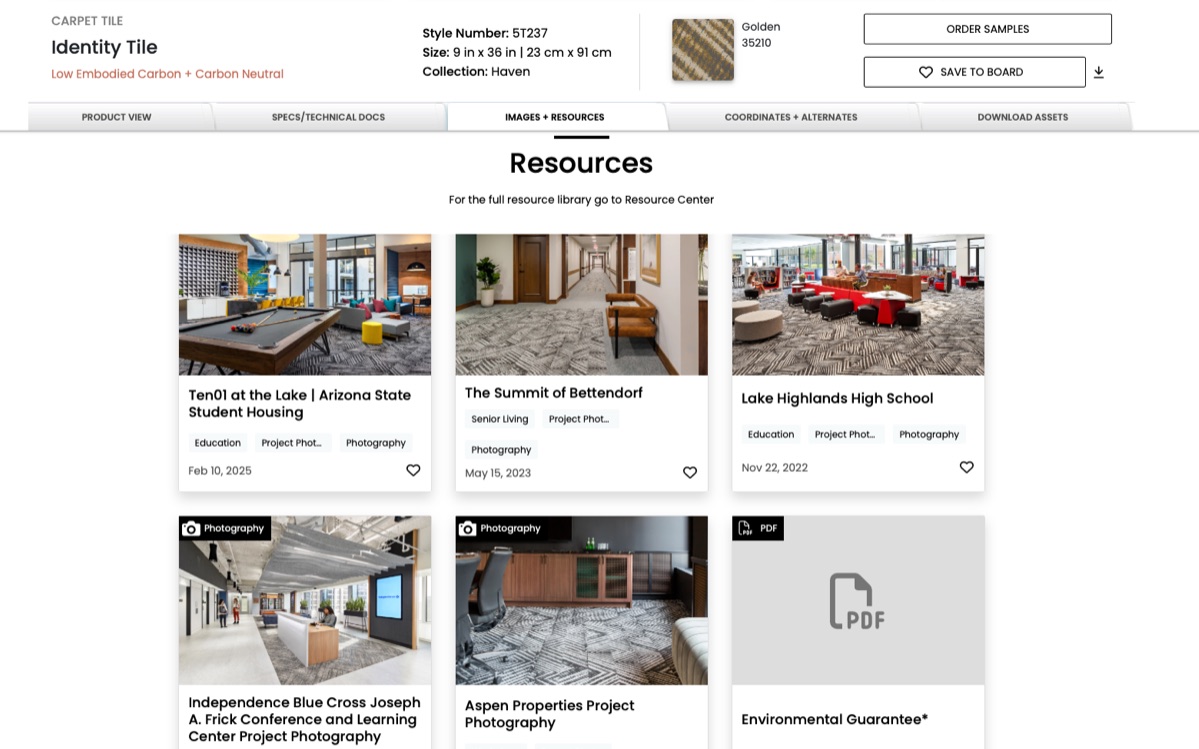
Product page showing project photography from education, senior living and workplace projects that use the product
Each product with the projects that use it
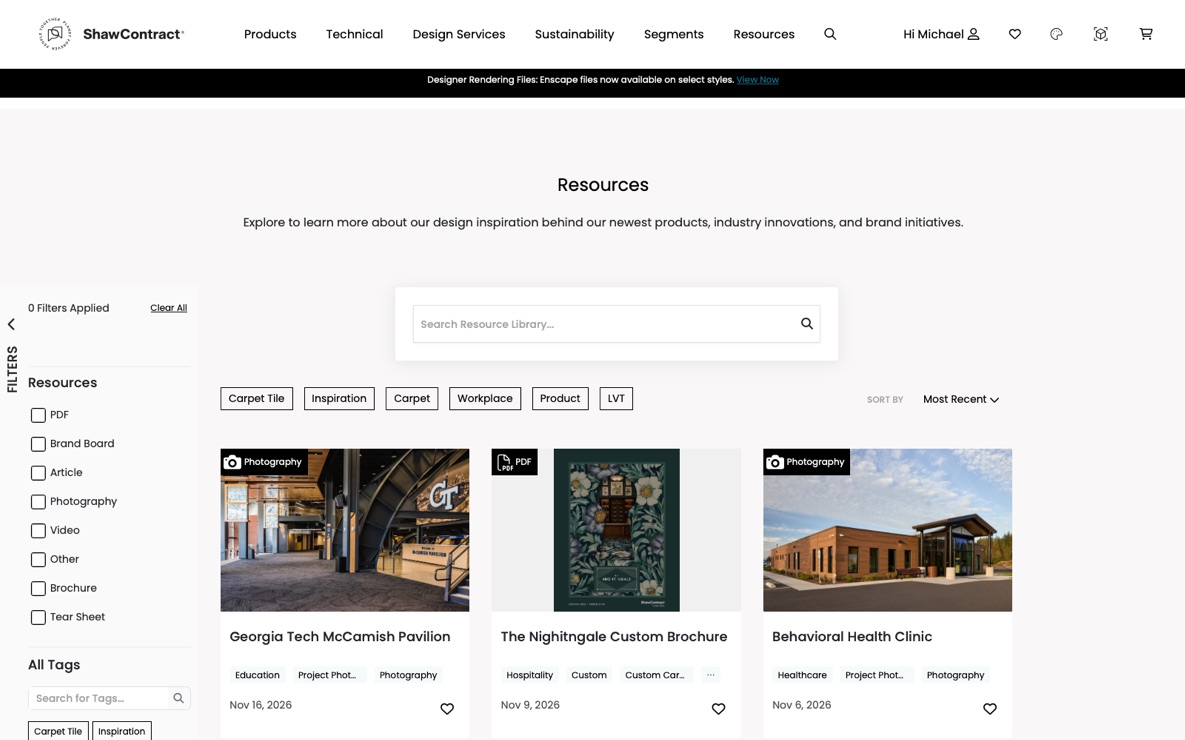
Resource Center with a search box, filters and cards for photography and brochures
The Resource Center

The problem

A $1B global business serving 14 markets had no digital product organization and no platform to build on. Customers could not buy or order samples online, and support did not scale with demand.

My role

I built and led the organization and the case for it. I was heavily involved in stack selection and architecture, and led the build-vs-buy and vendor decisions.

Approach

  • Fund it first. Business cases and executive stakeholder management secured $1.8M in transformation capital and $1.2M in recurring operating investment.
  • Organize for delivery. A 29-person cross-functional organization (3 direct reports, 26 delivery resources) across three Scrum teams, with delivery governance, team structure and workforce planning.
  • Launch the platform within 10 months of funding, then extend it: e-commerce with direct credit card purchase, and an omnichannel AI support chatbot on Azure.

Product leadership · Digital transformation of a flagship program

Design Awards, taken digital

A beloved annual program, rebuilt as an online experience when the pandemic made the old one impossible.
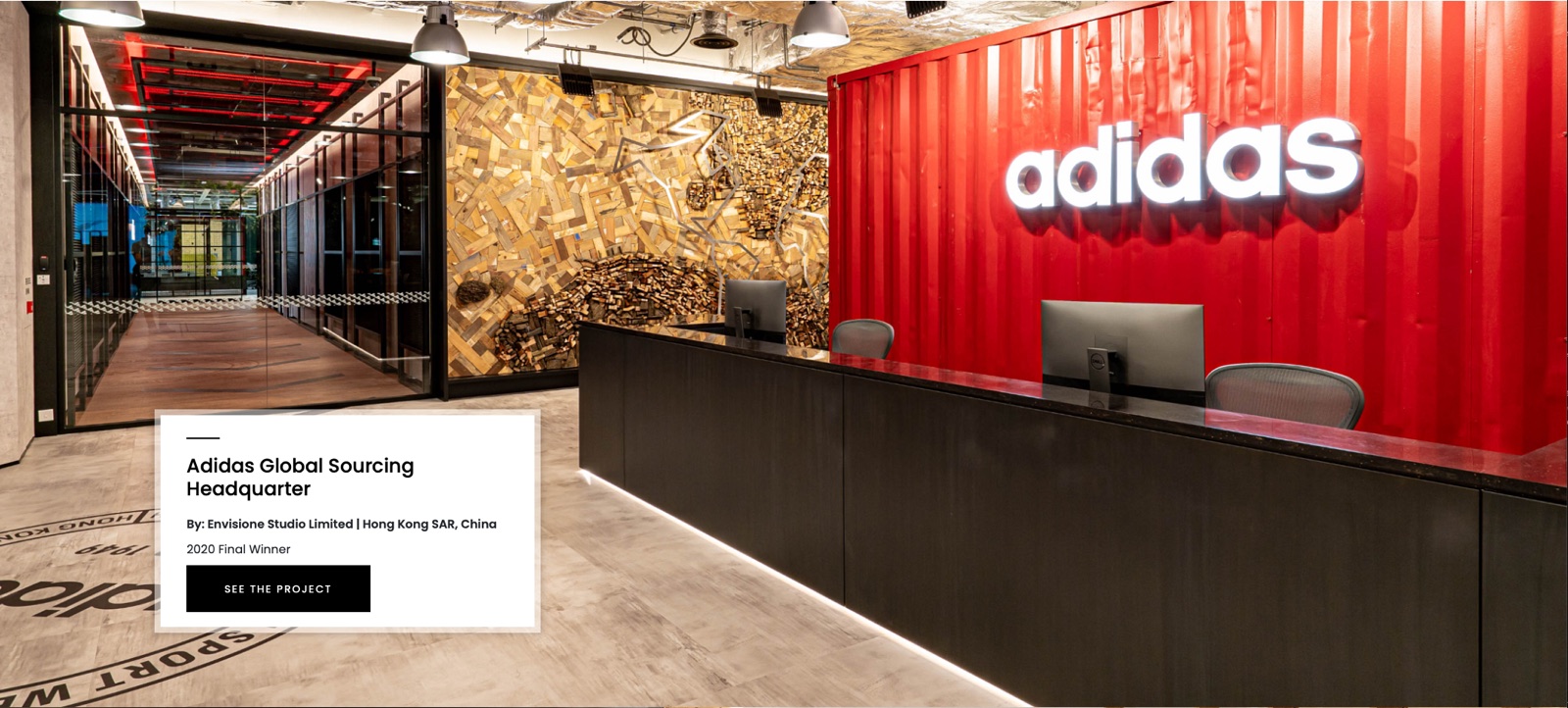
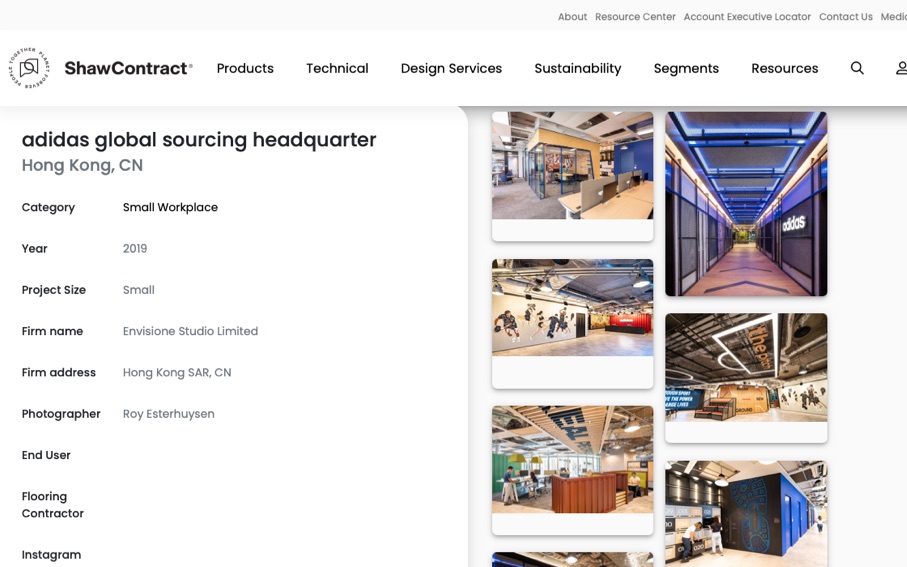
Hotel-style reception with a red shipping container wall and a card naming the 2020 final winner, Adidas Global Sourcing Headquarter, Hong Kong
2020 Final Winner: Adidas Global Sourcing Headquarter, Hong Kong (Envisione Studio Limited)
A project page showing category, year, firm and photographer next to a gallery of project photos
A project page: details and gallery
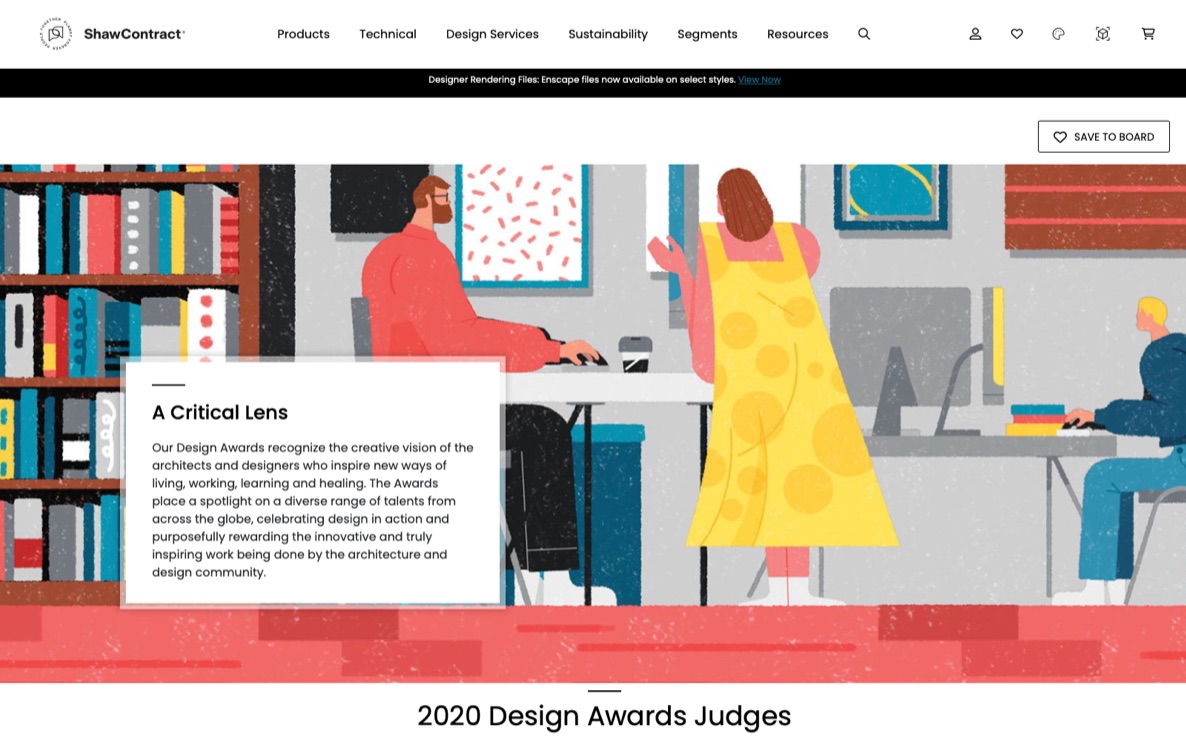
Design Awards page with an illustrated header, the text A Critical Lens and the heading 2020 Design Awards Judges
The judges page
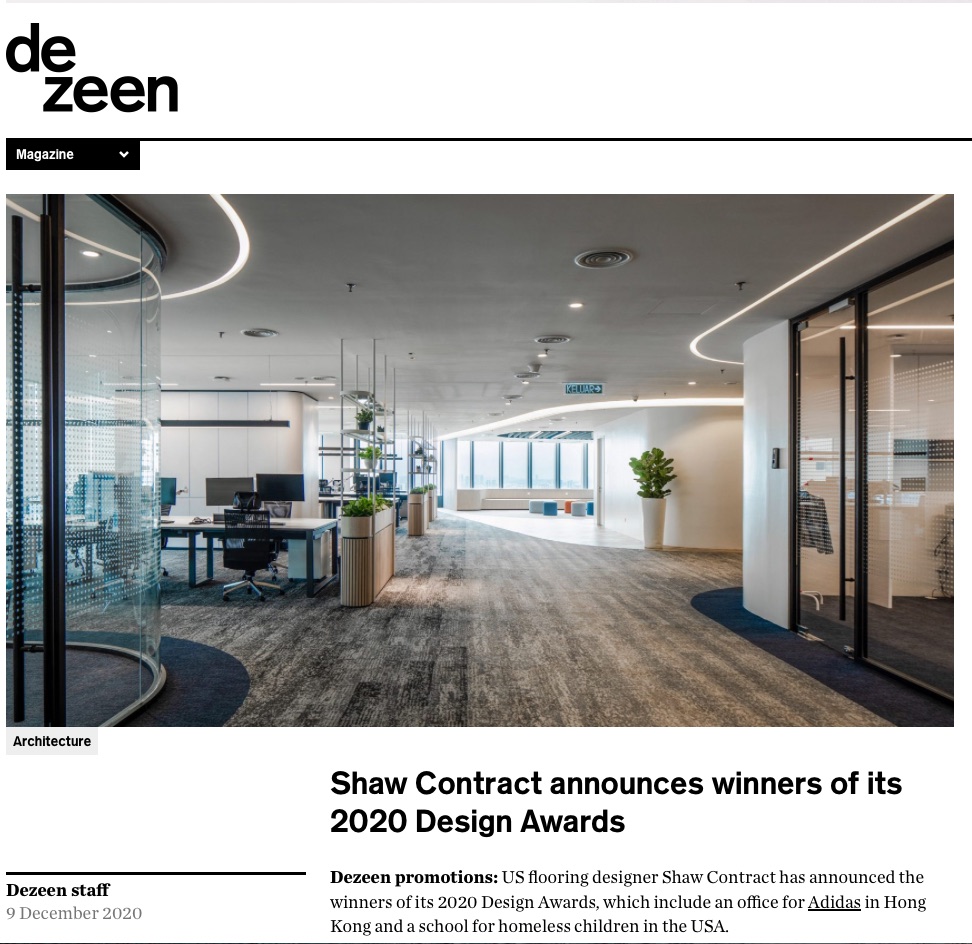
Dezeen article headline: Shaw Contract announces winners of its 2020 Design Awards
2020 winners on Dezeen (promoted content), 9 December 2020
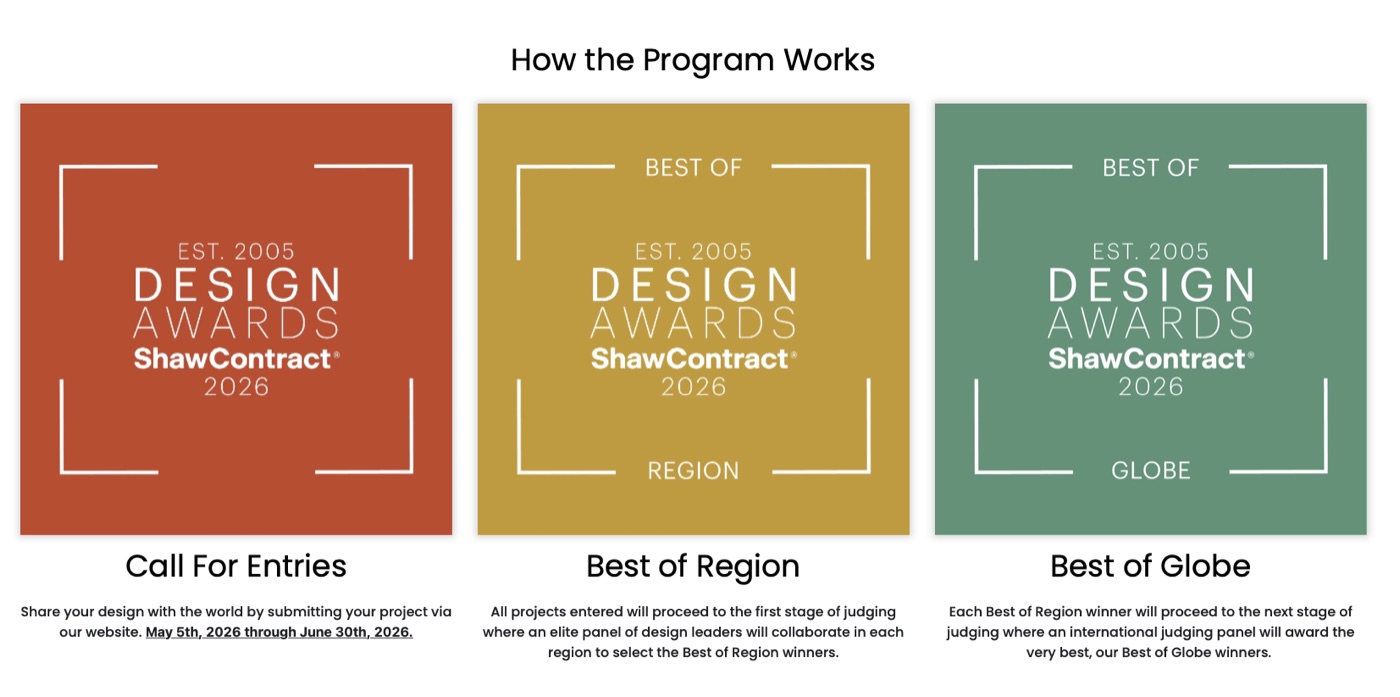
Three panels: Call for Entries, Best of Region and Best of Globe, each with a short description
The program today: call for entries, Best of Region, Best of Globe
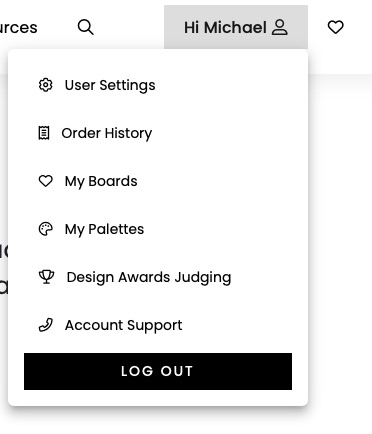
Account menu with a Design Awards Judging item
Judges reach their judging section from their account menu

The program

The awards had run successfully for many years. Every year, hundreds of projects were submitted by the world’s leading design firms, from NFL stadiums and global headquarters to five-star hotels, retail giants, universities, airports and world-class healthcare facilities. Importantly, flooring was not the criterion. It was Shaw Contract celebrating good design, not just its own product.

The problem

The program was excellent. The process was not.

  • Entries arrived many ways: emailed in, or uploaded through a WordPress site. Nothing enterprise or world class.
  • Graphic designers laid out every project by hand and printed it on foam core boards, set on easels, with overviews printed on paper.
  • Judges were flown in from around the world for a two-day event, then results were shared in print and blog posts.
  • Then the pandemic hit, and judges could not travel.

Before

Emailed entries, hand-built foam core boards, judges flown in for two days, results in print.

Manual layoutIn-person onlyPrint and blog reach

After

Enter online, judge in a secure portal, finalize in virtual sessions, and open the winners to a public vote.

Self-serve entryRemote judgingPeople’s Choice

My role

We had just relaunched the site and wanted projects to be a central element of it. I led the product decision to build that function out further and make the awards its first major use, taking the whole program from entry to winners online.

Approach

  • Build the platform, not a one-off. Anyone can create a project on the site, link the products used, upload photos and a description, answer a few questions and enter it into the awards. The same Projects function lives on after the program.
  • A judging portal for each role. Judges have their own profiles and a secure judging section. They see the projects assigned to their market segment, add comments, and cast a set number of votes for the projects they deem best.
  • Humans keep the final call. Moderators and admins (the segment directors) lock in the winners, in virtual sessions over Zoom.
  • Open the winners to everyone. The winners in each category moved on to People’s Choice voting, where anyone could vote. It was designed for sharing and social posting.

The program kept its spirit, celebrating design for its own sake, and became bigger than it could have been in a ballroom.

Product leadership · 0→1

Boards

The email thread is the worst product in B2B. We made the project itself the product.
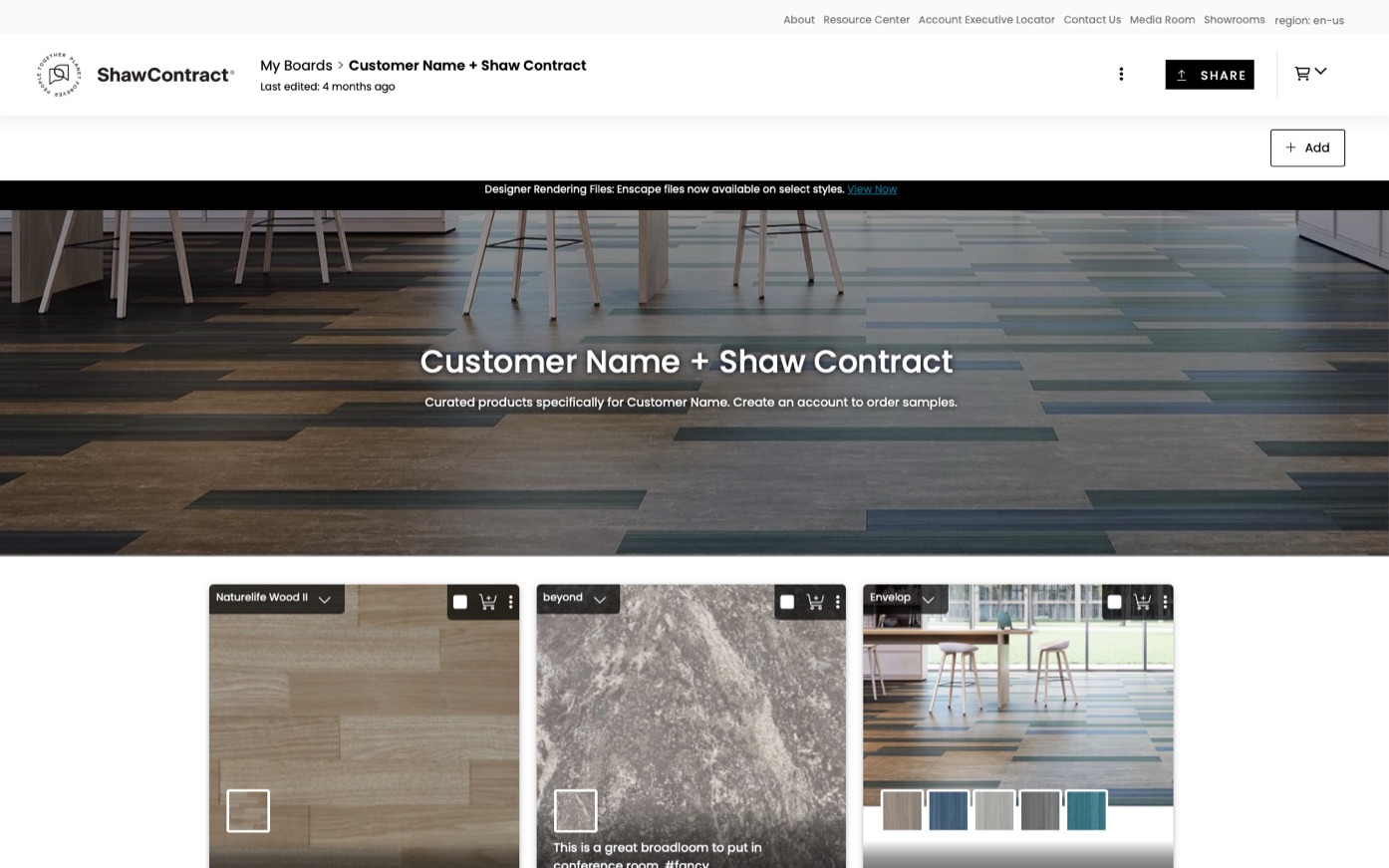
A shared Board with a hero image, a Share button and a grid of curated flooring products
A shared Board: curated products, one link
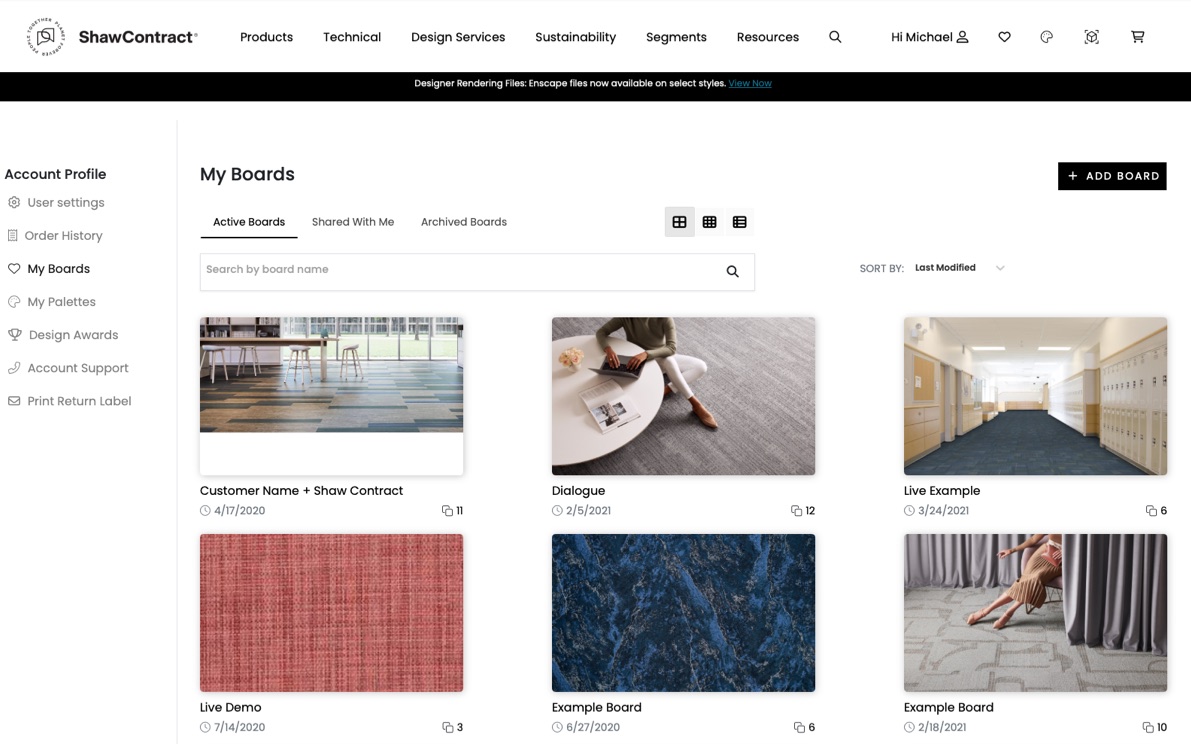
My Boards page listing active boards with thumbnails, dates and item counts
My Boards: a customer’s saved and shared boards

The problem

I thought the challenge in commercial flooring was helping customers choose the right product. It was coordinating people. At our annual Brand Meeting, more than 400 account managers from around the world were crouched by power outlets and standing outside keynotes, emailing screenshots, reading specifications over the phone and forwarding PDFs, because their customers back home were waiting.

We had built a product catalog, not a customer experience.

Before Boards

Screenshot, email, call, forward, repeat.

No shareable linkNo sample trackingNo Salesforce sync

After Boards

One link, everything inside: products, videos, coordinating Benjamin Moore paint, samples and quoting.

No loginSalesforce connectedNo email required

Discovery

With a colleague, I spent weeks travelling the country with designers, flooring contractors, architects, facility managers, healthcare systems, schools, hospitality groups and corporate customers. The industries differed, but every conversation sounded the same: they were all coordinating a project through email. Customers were not struggling to buy flooring. They were struggling to move a project forward.

My role

I conceived Boards as a 0→1 product and led it from discovery through launch and iteration.

Approach

  • Reframe the question. Not “how do we improve the website?” but “what if the project itself became the product?”
  • One shareable workspace per project. Account managers curate products, collection videos, paint colors, samples, quotes and project information, and share them with a designer, end user, contractor or facility manager through a single link.
  • No login, no hunting for the latest attachment. Everyone on the project sees the same thing.
  • Connected to the sales tools. Salesforce is connected, so it fits how account managers already work.
  • One test for every feature: does it give someone one less reason to start another email thread?
  • Let evidence decide. A/B testing and customer feedback drove what changed.

The lesson: customers don’t wake up wishing for a better website. They are trying to complete a job. Design around that.

AI governance

AI governance on Monitaur

As the first use case on Unum’s AI governance platform, I led governance with the compliance team and enterprise partners. That set up risk tiering, controls, stage-gate check-ins and enterprise visibility for the AI use cases that followed.

Experience

  1. Apr 2021 – Present

    Unum Group

    Principal Business Analyst, Enterprise Business Architecture & Portfolio Strategy

    Partner to AVPs, Heads of Delivery, and IT Vice Presidents across Claims and Leave Management, turning strategy into funded roadmaps and delivery-ready work for platforms supporting 25,000+ new claims monthly and 65,000+ active digital users.

    Governance, Risk & Controls

    • AI governance: as the first use case on Monitaur, Unum’s AI governance platform, led governance with the compliance team and enterprise partners, establishing risk tiering, controls, stage-gate check-ins, and enterprise visibility for the AI use cases that followed
    • Advise the Head of IT on prioritization, governance, and budget strategy for a $20–24M annual technology investment within a SAFe operating model, using Rally and Clarity PPM; estimate value before work begins with CX, finance, and operations partners and prepare ROM estimates and annual investment recommendations
    • Worked on an AI letter-generation project that was stopped because its mandate was to recreate the existing process, not rethink templates, data models, or the letter’s role versus other systems; it would not have made letters faster, better, or more automated, and was paused until the foundations and approach are agreed with the right stakeholders

    Production Platforms, Data Quality & Operational Controls

    • Led the production agentic IVR hands-on for 16 months, then transitioned it to a scrum team; the agent runs on a tightly managed task path, with checks at submission and human audit of call transcripts and audio, and evolved from intent- and rule-driven to LLM-based
    • Helped manage Unum’s AWS Connect instance, including call recording, routing, authentication, phone tree, and intent management
    • Designed guided new-claim intake for a contact center of 1,000+ agents, with detailed scripting and question paths that let agents quickly complete intake calls in a complex, high-stress environment and supported the “street to seat” hiring model
    • Designed and built, with Claude Code and in partnership with engineering, a claim-status service and React component kit that gives agents, portals, letters, email, and IVR one consistent answer to claimants’ status questions
    • Integrated 13 read-only upstream services behind a single tested transform, with a business-editable rules layer (143 rules, Rule Manager, CSV sign-off); 1,325 automated tests (about 98% line coverage), pull-request review, audit logging, and Terraform and pipeline deployment on a private AWS API; aligned business analysts and product owners on 29 claim-status scenarios before build

    → 99% accuracy on new claim intake calls (accurate and complete data capture needed to process a claim)

    Conversational AI: Vendor Evaluation Through Production

    • Owned the vendor evaluation for a conversational AI platform and led all aspects of the Parloa implementation, doing much of the work directly and managing the team members who did the rest; defined the business case, operating model, success metrics, and adoption roadmap with engineering, data, and operations
    • Contributed to the enterprise decision to move the agentic IVR to AWS (Amazon Connect, Lex, Bedrock): compared approaches and trade-offs, defined like-for-like requirements, and tested the AWS solution; supported the move and the engineers building it

    → Parloa pilot: 25% of opted-in callers completed their task without an agent · 30% lower handle time (call + after-call work) vs. pre-pilot baseline

    Digital Tasks & Digital Self-Service

    • Led discovery, current-state assessment, business case, and solution design for Digital Tasks, replacing email collection from employers and phone and fax collection from claimants with a digital-first, automated ecosystem delivered in increments across personas, topics, and product lines
    • Hands-on in the design and build of the Employee Portal and many aspects of the Employer and Manager portals; replaced per-employer custom intake with a scalable model of structured customization categories and headless-CMS messaging

    → 1M+ transactions in 2026 YTD · Information received ~2.5 days faster · Fewer outbound calls · Digital intake 20% → 80% · CX 4.4 employee / 4.5 employer

  2. Apr 2016 – Apr 2021

    Shaw Contract

    Digital Marketing Manager, Enterprise Digital Transformation

    Apr 2018 – Apr 2021

    Built Shaw Contract’s first digital product and customer experience organization for a $1B global business (14 markets, 100,000+ monthly users), launching the initial platform within 10 months of funding.

    • Built and led a 29-person cross-functional organization (3 direct reports, 26 delivery resources) across three Scrum teams, setting up delivery governance, team structure, and workforce planning; led build-vs-buy and vendor decisions and was heavily involved in stack selection and architecture
    • Secured $1.8M in transformation capital and $1.2M in recurring operating investment through business cases and executive stakeholder management; launched e-commerce with direct credit card purchase; delivered an omnichannel AI support chatbot on Azure; conceived Boards, a 0→1 customer collaboration platform, and used A/B testing and customer feedback to improve interaction by 60% and account creation by 80%

    → 350% more AI-enabled support capacity with 20% lower handle time · 70% more sample orders · ~50% lower annual operating costs

    Workplace Marketing Manager, Product Strategy & Customer Acquisition

    Apr 2016 – Apr 2018

    • Led customer, market, and competitive research for the largest commercial segment and directed go-to-market for 6–8 major product launches a year
  3. Feb 2013 – Apr 2016

    ND&P

    Account Executive, Digital Strategy Consulting

    • Facilitated executive discovery workshops for healthcare, insurance, and manufacturing clients; led the Massachusetts General Hospital Imaging account within HIPAA requirements and reduced cost per newsletter subscription by 82% through A/B-tested paid search
  4. Jun 2012 – Feb 2013

    2x4

    Junior Account Executive (Chicago-based agency, Chattanooga office; held during college)

    • Planned and bought media for Ariat; supported brand positioning and campaign planning for Bernina and General Tire
  5. Apr 2010 – Jun 2012

    The Market Research Institute

    Research Associate (held during college)

    • Led focus groups and led brand campaign, social media, and email marketing projects

Core expertise

  • Governance, risk & controls: AI governance and risk tiering, stage gates, SAFe portfolio governance, business cases
  • Platforms & operations: production AI operations, Amazon Connect, API and integration design, Terraform and CI/CD
  • AI & technology: conversational and agentic AI, Bedrock, Lex, Parloa, AI-assisted development, 0→1 product leadership
  • Domain: insurance, leave and disability claims, HIPAA, contact center technology

Education & community

  • B.B.A., Marketing, Southern Adventist University
  • AWS AI Practitioner Learning Plan
  • Advisor & instructor, youth robotics organization

Let’s talk

Based in Southern Pines, North Carolina, working remotely.

Connect on LinkedIn